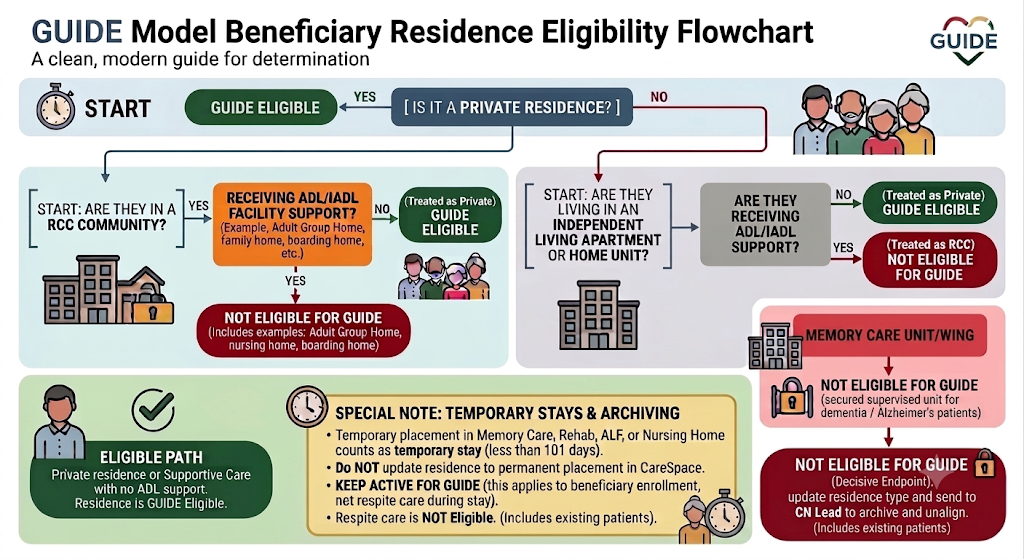
Patient Eligibility for GUIDE

To qualify for GUIDE patients must:

  1. Have a qualifying diagnosis, defined as one of the ICD-10 code from the CMS approved list for this programs

  2. Have Traditional Medicare (Part A & B) as primary payer

  3. Have to have a referral from a GUIDE contracted provider

Exclusions

Patients are excluded from GUIDE if they meet any of these criteria:

  1. Enrolled in Medicare Advantage, including Special Needs Plans (SNPs)

  2. Enrolled in the Program of All-Inclusive Care for the Elderly (PACE)

  3. Has elected the Medicare hospice benefit

  4. Is a long-term care facility resident (more details below)

  5. Is enrolled with another GUIDE participant program

Assisted Living Facility vs. Memory Care vs. Long Term Care Facility

Assisted Living Facility (ALF)

  • (eligible for GUIDE)

  • ALFs are designed for seniors who value their independence but need some help with daily living activities (ADLs) like bathing, dressing, and medication management.

Memory Care

  • (eligible for GUIDE)

  • Memory care is a specialized residential option dedicated entirely to individuals with Alzheimer’s disease or other forms of dementia.

Long Term Care Facility

  • (not eligible for GUIDE)

  • Also known as Skilled Nursing Facilities (SNFs), nursing homes offer the highest level of long-term care outside of a hospital.

For the purposes of GUIDE, CMS defines a Long Term Care Facility resident as someone:

'having a nursing home stay 101 days or longer that is not covered under the Medicare skilled nursing facility benefit'.

GUIDE allows alignment of patients in a residential care community (RCC). They define this as:

'a residential facility staffed to provide comprehensive care services and supports, including assistance with activities of daily living, medication management, and supervision, to adults who cannot live independently but do not require intensive nursing care. Examples may include an assisted living facility or memory care program (excludes nursing home level of care) that create or maintain the individual’s ability to safely live in the community.'